


With storm season on the horizon, we need to think about keeping our commercial kitchens safe. Gas systems, in particular, need our attention. We want to make sure everything is in good working order before bad weather hits. This means taking a close look at our equipment and how it’s set up. Doing this now can prevent bigger problems later, keeping our staff and our business protected.
Key Takeaways
- Before storm season starts, we should do a thorough check of all gas lines and appliances in our commercial kitchen. This includes looking for any leaks or damage that might have happened over time.
- We must make sure all gas appliances and their connections are firmly secured. This stops them from moving around or getting damaged during strong winds or heavy rain.
- Knowing how to shut off the gas supply quickly in an emergency is important. After a storm passes, we need to inspect the system again before turning the gas back on to be sure it’s safe.
Ensuring Commercial Kitchen Gas Safety Before Storm Season
Getting ready for storm season in a commercial kitchen is more than just stocking up and checking flashlights. We need to pay special attention to our gas systems—otherwise, we’re risking more than just spoiled food. Our goal is to catch small problems before they turn into emergencies. Let’s break it down step-by-step.
Pre-Storm Gas System Inspection Checklist
A checklist helps us keep track of everything. Here’s what we go over before storms hit:
- Inspect all visible gas lines for damage, rust, or leaks. If you smell gas, call a professional right away.
- Check connection points at ovens, stoves, and fryers. Make sure everything feels secure and isn’t wiggling or loose.
- Test the hood and exhaust fans—these keep fumes out, especially if something goes wrong.
- Make sure emergency shutoff valves are clearly marked and not blocked by clutter.
- Schedule a licensed technician to inspect equipment if there’s anything odd or you’re not sure.
| Inspection Area | Good Condition | Needs Repair | Not Inspected |
|---|---|---|---|
| Visible Gas Lines | |||
| Connection Points | |||
| Hood/Exhaust Fans | |||
| Emergency Shutoff Valves |
Gas safety before storms isn’t about perfection—it’s about spotting what might go wrong and acting early so nobody has a bad day.
Securing Gas Appliances and Lines
Storms can shake things up—sometimes literally. If there’s high wind or water, our gas appliances and pipes are at risk. So, we do a quick check:
- Brace larger units like ovens or ranges to sturdy walls or non-slip floors.
- Secure flexible gas lines with proper clips or supports, making sure they don’t kink or tug under pressure.
- Move any portable equipment off the ground, just in case there’s flooding or leaks that might reach lower areas.
- Double-check that nothing is blocking access to the shutoff in case we need to turn it off fast.
And if something feels a little off, we never hesitate to call a professional. Keeping everyone safe is more important than skipping a step because we’re in a hurry.
Storm season comes every year, but random emergencies don’t have to. These small checks make a big difference, and together we’ll be ready for whatever the weather throws at us.
Maintaining Commercial Kitchen Gas Safety During and After Storms
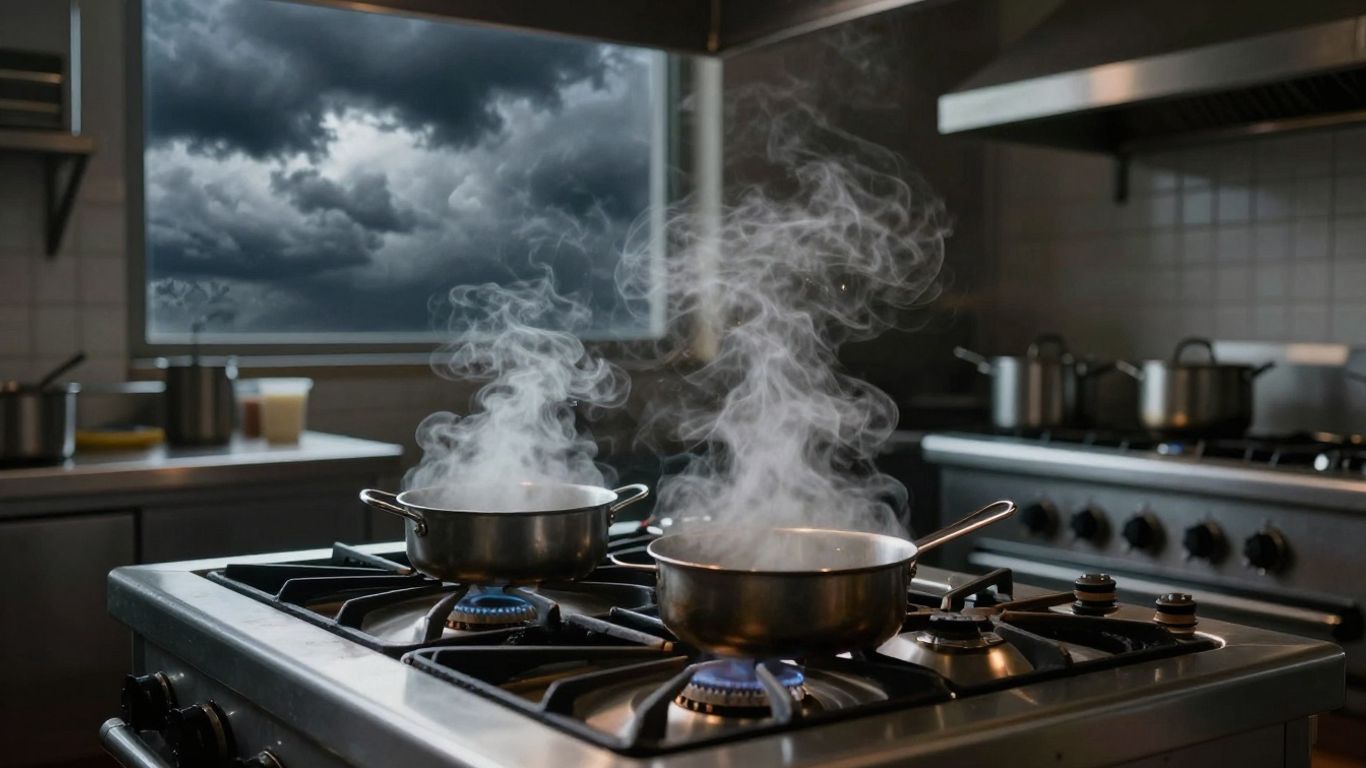
Storms can bring unexpected challenges to our kitchens, and gas systems are particularly vulnerable. We need to be ready to act quickly and correctly when severe weather hits. Our priority is always the safety of our staff and customers, and that means knowing what to do with our gas lines and appliances when the wind howls and the rain pours.
Emergency Shutdown Procedures for Gas Systems
Knowing how to shut off the gas supply is a critical skill. If we suspect any damage to our gas lines or appliances, or if we’re advised to do so by local authorities, we must act fast. Here’s what we need to remember:
- Locate the main gas shut-off valve. This is usually found where the gas line enters the building or near the meter. Make sure everyone on the kitchen team knows where it is and how to operate it. It might be a lever or a wheel.
- Turn the valve perpendicular to the pipe to shut off the gas. If it’s a lever, a quarter turn is all it takes. For a wheel, turn it clockwise until it stops.
- Never attempt to turn the gas back on yourself if you suspect damage. This is a job for a qualified professional. Trying to fix it ourselves could lead to a dangerous situation.
- Ventilate the area if you smell gas. Open doors and windows, but don’t turn on any lights or use anything that could create a spark.
Post-Storm Gas System Assessment
Once the storm has passed and it’s safe to assess the situation, we can’t just assume everything is fine. We need to be thorough. A careful inspection is vital before we even think about turning the gas back on.
Here’s our approach:
- Visual Inspection: Walk around the exterior of the building and check the gas meter and any exposed lines for obvious damage like dents, kinks, or breaks. Look for any debris that might have fallen on or around the equipment.
- Appliance Check: Inside the kitchen, inspect all gas-powered appliances. Check connections, hoses, and the units themselves for any signs of physical damage. Make sure nothing looks out of place or compromised.
- Professional Evaluation: Even if we don’t see any obvious problems, it’s wise to have a professional gas technician inspect the entire system. They have the tools and knowledge to detect subtle issues we might miss. This is especially true if the storm was severe or if there was any flooding.
We must remember that gas leaks are incredibly dangerous. The smell of rotten eggs is a clear warning sign. If we detect it, we should evacuate immediately and call the gas company or emergency services from a safe distance. Our kitchens are busy places, and the risk of a spark from electrical equipment is always present, making prompt and correct action absolutely necessary.
We should also keep a log of any inspections or maintenance performed after a storm. This helps us track the condition of our gas system over time and provides a record if any issues arise later. Safety isn’t just about reacting; it’s about being prepared and following up diligently.
Wrapping Up Our Kitchen Safety Check
So, we’ve talked a lot about getting our kitchens ready for storm season, especially when it comes to gas lines. It might seem like a lot, but taking these steps now can really save us headaches later. We don’t want any surprises when the weather turns bad. Checking those connections and making sure everything is up to par is just good practice for any kitchen. Let’s all make sure we’re doing our part to keep our workspaces safe and sound, no matter what the weather throws at us. It’s about being prepared, plain and simple.
Frequently Asked Questions
Why is it so important to check our kitchen’s gas lines before bad weather hits?
When storms approach, strong winds and heavy rain can cause damage. We need to make sure our gas equipment and the pipes connected to it are secure and haven’t been weakened. This prevents dangerous gas leaks that could lead to fires or explosions, keeping everyone safe.
What should we do if we suspect a gas leak after a storm?
If we smell gas or hear a hissing sound, we must act fast. The first step is to stop using any electrical switches or devices, as sparks can ignite gas. Then, we should leave the building immediately and call the gas company or emergency services from a safe distance. We should never try to fix a leak ourselves.
How can we make sure our cooking equipment stays safe during a storm?
Before a storm, we should check that all our cooking appliances are firmly in place. We also need to ensure the gas pipes connecting to them are flexible and not likely to break if things move around. Securing everything properly helps prevent damage to the gas lines and the equipment itself during strong winds or if there’s flooding.

